


Why Generative AI Needs High-Speed SSDs: The Storage Power Behind AI Training & Inference
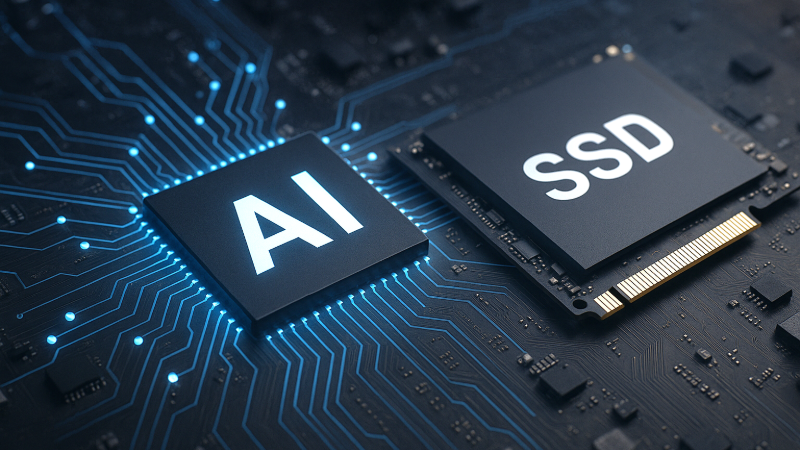
Generative AI demands high computation and data flow, and SSDs ensure smooth real-time data access.
Product Line: SSD Solid State Drives
Application Scenario: Generative AI
As generative AI grows more powerful, it can now produce images, articles, and even videos. Behind these creations lies a massive demand for computational power and fast data flow. While GPUs and CPUs handle processing, stable and high-capacity SSDs are essential to manage large datasets. High-performance Generative AI SSDs improve real-time processing and read and write efficiency. This article explores the critical role of SSDs in generative AI and guides you in selecting the right AI SSD.
Why SSDs Are Critical for Generative AI
Modern AI systems like ChatGPT, Gemini, SORA, and Midjourney rely on large machine learning models that handle massive data. Fast, reliable, and durable storage is essential, or even powerful GPUs and CPUs cannot perform optimally. To fully support AI workloads, an SSD must excel in several key aspects:
- Massive Data Storage: AI training uses terabytes of datasets and model parameters. High-capacity SSDs provide fast access to these huge files, keeping training efficient and uninterrupted.
- High-Speed Random Access: During training, GPUs constantly read and write data randomly. SSDs with high IOPS and low latency ensure smooth performance and prevent slowdowns that could affect computation.
- Write Endurance: Continuous model updates and checkpoint saves demand durable SSDs. Strong write endurance keeps AI training stable and protects valuable data.
|
AI Technology |
Category |
Applications |
|
ChatGPT |
Text Generation |
Automated writing, dialogue systems, text summarization, language understanding. |
|
Gemini |
Text Generation |
Efficient dialogue generation, text analysis, article creation. |
|
Perplexity |
Text Generation |
Text prediction, language model applications. (Natural Language Processing) |
|
Grok |
Text Generation |
Enterprise-level conversational systems, content generation. |
|
SORA |
Video Generation |
Animation production, live-action video creation. (Artistic creation) |
|
Midjourney |
Image Generation |
Illustration design, visual content generation. |
|
Copilot |
Code Generation |
Programming assistance, code suggestions, development acceleration. |
Choosing the Right Generative AI SSD
When choosing the right SSD for generative AI, performance, durability, and data protection are key factors. AI model training and large-scale data processing demand fast and stable read/write speeds. Therefore, when selecting an SSD, it’s important not only to consider speed but also endurance and data integrity. Here are a few key points to guide your choice:
1. High-Speed Interfaces
Choose SSDs with PCIe Gen 5x4 or PCIe Gen 4x4 interfaces supporting NVMe for smooth data handling.
2. TLC NAND Flash
TLC SSDs offer the best balance of performance, endurance, and cost-effectiveness for most AI applications.
3. High IOPS Performance
High IOPS reduces latency and boosts efficiency. For example, the SP Endura NAS ED90 SSD uses PCIe Gen 4x4 and NVMe 1.4, achieving up to 950K 4K random write IOPS. Its 4,100 TBW endurance ensures stable long-term operation.
4. Data Protection Features
Opt for SSDs with Dynamic Wear Leveling to evenly distribute write cycles. LDPC and ECC error correction help maintain data integrity, preventing AI computation failures due to corrupted data.
By following these guidelines, you can choose stable, high-performance Generative AI SSDs that meet the demanding requirements of AI computing.
• • •